NEW INFO | Discussing the latest information from various media and various fields

Mars: The Red Planet And Potential Home For Life

Premium Photo | Bright bokeh blurred like mars red planet in the sky - Source www.freepik.com
Mars: The Red Planet And Potential Home For Life. Discovering the mysteries and uncovering the secrets of the cosmos has been one of the human race's most interesting journeys. We have always been curious about the possibility of life on other planets, and Mars has long been a top contender. With its thin atmosphere, frigid temperatures, and rusty red surface, Mars is a harsh environment compared to Earth, but it also has some intriguing similarities. So, is Mars the Red Planet and a potential home for life, and if so, what would that mean for us?
Our team of researchers and writers have been doing some analysis, digging up information, and putting together this Mars: The Red Planet And Potential Home For Life guide to help answer these questions.
| Key Points | Mars | Earth |
|---|---|---|
| Planet Type | Rocky | Rocky |
| Size | Smaller than Earth | Larger than Mars |
| Atmosphere | Thin and mostly carbon dioxide | Thick and mostly nitrogen and oxygen |
| Temperature | Frigid, with an average of -63 degrees Celsius | Moderate, with an average of 15 degrees Celsius |
| Surface | Rusty red and covered in craters and volcanoes | Blue and green, with continents and oceans |
| Water | Liquid water may exist underground or in the polar ice caps | Abundant liquid water on the surface |
| Life | No confirmed evidence of life, but scientists believe it may have existed in the past or could exist underground | Abundant life, including humans, plants, and animals |
So, is Mars the Red Planet and a potential home for life? The answer is not yet clear, but the evidence is mounting that it could be. If we can find evidence of life on Mars, it would have profound implications for our understanding of the universe and our place in it. It would also give us hope that we are not alone in the vastness of space.
FAQ
This section addresses frequently asked questions about Mars, providing comprehensive answers to common concerns or misconceptions surrounding the Red Planet.

Mars Red Planet of Solar System Stock Vector - Illustration of vector - Source www.dreamstime.com
Question 1: Is Mars a viable candidate for supporting life?
Answer: While Mars currently lacks the conditions necessary for sustained human life, current research and exploration efforts aim to better understand its potential for supporting future life. The presence of water, both in the form of ice at the poles and possibly liquid beneath the surface, suggests that Mars may have once been a habitable environment. Ongoing missions continue to investigate the possibility of past or present life on the Red Planet.
Question 2: What are the main obstacles to human exploration of Mars?
Answer: Mars poses several significant challenges for human explorers, including its distance from Earth, extreme environmental conditions with low atmospheric pressure, cold temperatures, and exposure to radiation. The lack of a protective magnetic field and breathable atmosphere necessitate advanced spacecraft and protective measures to ensure the safety and survival of astronauts.
Question 3: What are the unique geological features of Mars?
Answer: Mars is renowned for its diverse and intriguing geological features, including the Valles Marineris, a colossal canyon system that dwarfs Earth's Grand Canyon, and Mount Olympus, the largest volcano in the solar system. The presence of ancient riverbeds, deltas, and evidence of past water activity suggest Mars had a different climate and surface conditions in the distant past.
Question 4: What are the potential risks associated with Mars exploration?
Answer: Human exploration of Mars is inherently associated with risks, ranging from the aforementioned environmental hazards to technological challenges and the psychological impact on astronauts. The journey to and from Mars is lengthy and requires reliable spacecraft and life support systems, while the harsh conditions on Mars demand proper protective measures and emergency protocols.
Question 5: What are the scientific objectives of Mars missions?
Answer: Mars missions encompass a wide range of scientific objectives, including the search for evidence of past or present life, the study of Martian geology and climate, the investigation of the planet's interior and atmosphere, and the exploration of its potential resources. By unlocking the secrets of Mars, scientists hope to gain a deeper understanding of the evolution of the solar system and life itself.
Question 6: What is the future of Mars exploration?
Answer: The future of Mars exploration holds exciting possibilities, with ongoing missions laying the groundwork for future human expeditions. The development of reusable spacecraft, advanced propulsion systems, and technologies for in-situ resource utilization promise to make human missions to Mars more efficient and sustainable. International collaborations and partnerships play a vital role in advancing Mars exploration, bringing together diverse expertise and resources to tackle the challenges of unlocking the secrets of the Red Planet.
In conclusion, Mars remains an enigma, holding the potential to reveal secrets about the origins of life and the evolution of our solar system. Through continued exploration and scientific research, humanity seeks to unravel the mysteries of Mars and determine its future role in our cosmic journey.
Transition to the next article section:
Tips
Discover the fascinating world of Mars with tips on understanding its potential as a home for life.
Tip 1: Oceans and Atmosphere
Mars once harbored a substantial atmosphere and liquid water on its surface, indicated by geological evidence of ancient riverbeds and deltas. Understanding the conditions that led to their loss provides insights into the planet's long-term habitability.
Tip 2: Geological Activity
Mars is not a geologically dead world. Evidence of recent volcanic activity and the presence of active geological processes suggest that its interior is still dynamic. Studying these processes can reveal clues about the potential for subsurface hydrothermal systems and habitable environments.
Tip 3: Search for Biosignatures
Identifying biosignatures, or chemical and geological indicators of past or present life, is crucial in assessing Mars' habitability. Investigating ancient sedimentary rocks, examining the chemical composition of the atmosphere, and searching for organic molecules are key strategies for detecting potential signs of biology.
Tip 4: Mission Design and Technology
Designing and deploying tailored missions is essential for successful exploration of Mars. Optimizing rovers, landers, and orbiters, as well as developing advanced instrumentation and data analysis techniques, can enhance our ability to gather valuable information and draw informed conclusions.
Tip 5: International Collaboration
Global cooperation is vital in advancing our understanding of Mars. Sharing resources, expertise, and data allows for a more comprehensive and efficient approach to exploration. Collaborations can lead to innovative technologies and mitigate the challenges associated with long-distance missions.
Summary:
Explore Mars: The Red Planet And Potential Home For Life in greater depth by following these tips. These insights will help us uncover the secrets of this enigmatic world and contribute to our ongoing quest for knowledge beyond Earth.
Mars: The Red Planet And Potential Home For Life
As a promising candidate for harboring extraterrestrial life, Mars captivates the scientific community and the public alike. Here are six key aspects to consider regarding Mars and its potential to sustain life:
- Atmosphere: Thin and Carbon Dioxide-Dominated
- Surface: Dusty, Rocky, and Cratered
- Water: Past Liquid Water, Potential Subsurface Reservoirs
- Temperature: Cold and Variable
- Radiation: High Solar and Cosmic Rays
- Magnetic Field: Weak and Patchy
These aspects collectively shape our understanding of Mars' habitability. The thin atmosphere and lack of a magnetic field make it challenging for life to thrive on the surface. However, the evidence of past liquid water suggests that Mars may have once been more hospitable. Ongoing scientific missions, such as NASA's Perseverance rover, seek to uncover more secrets about Mars' environment and search for signs of past or present life.
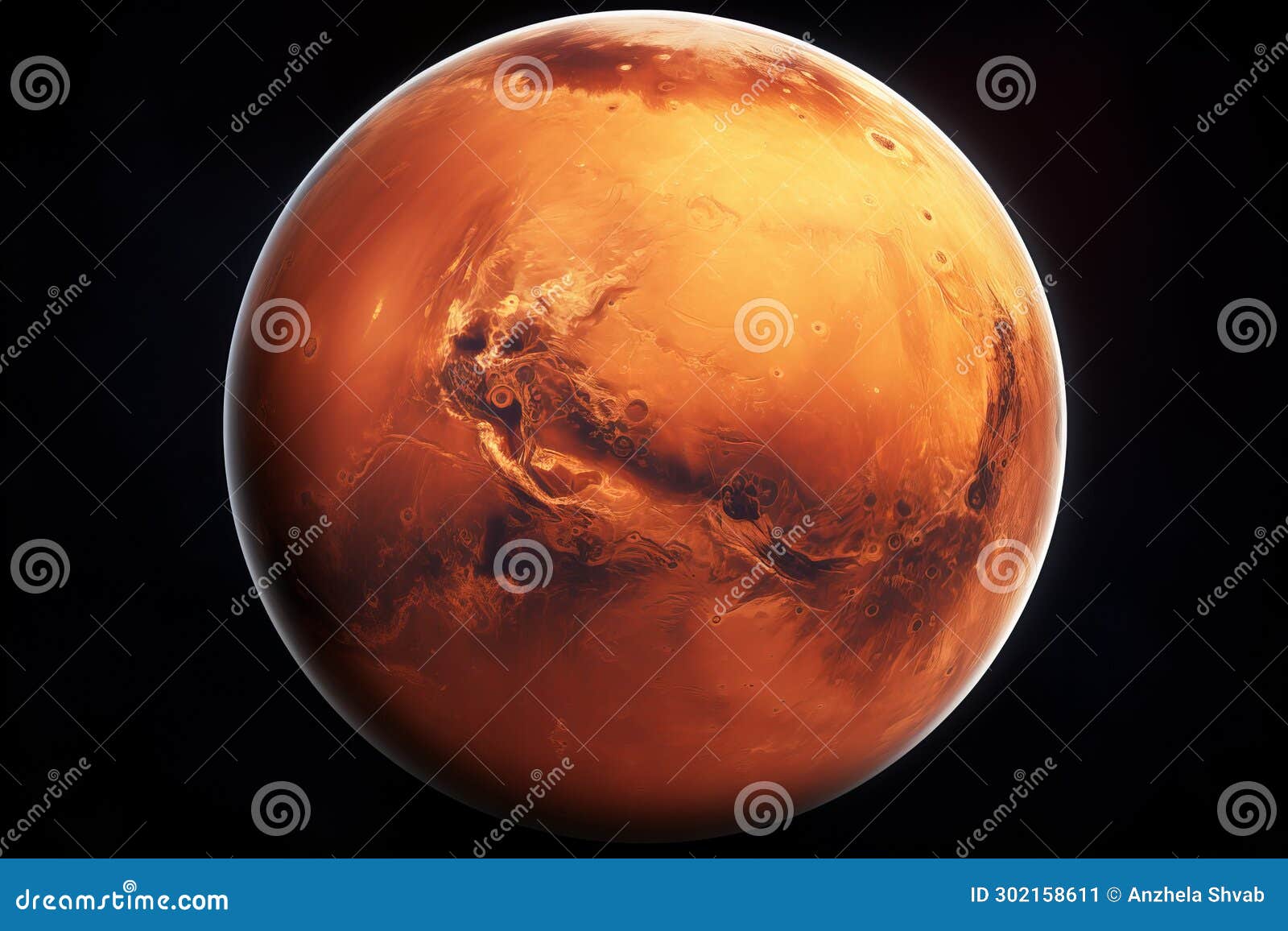
Exploring the Red Planet. Unveiling the Unique Terrain and Potential - Source www.dreamstime.com
Mars: The Red Planet And Potential Home For Life
Mars, often referred to as the Red Planet due to its distinctive reddish appearance, has long captured the curiosity and fascination of scientists and researchers as a potential home for life beyond Earth. This interest stems from Mars' similarities to our planet, including its terrestrial nature, its once-abundant water reserves, and its potential for harboring habitable environments.

Planet Mars, with Oceans, and Potential Life. Elements of this Image - Source www.dreamstime.com
The search for life on Mars has been a central focus of space exploration for decades, with missions such as the Viking landers and the Curiosity rover providing valuable insights into the planet's past and present conditions. Evidence suggests that Mars was once a much wetter and warmer planet, with liquid water flowing on its surface and a thicker atmosphere. This environment could have supported microbial life, and researchers are actively searching for signs of such life in ancient Martian rocks and sediments.
The potential for life on Mars has significant implications for our understanding of the distribution and evolution of life in the universe. If life is found on Mars, it would challenge the long-held belief that Earth is unique in its ability to sustain life. It would also provide valuable insights into the conditions necessary for life to arise and thrive, potentially informing our search for life on other planets and moons.
The exploration of Mars continues to be a dynamic and exciting field of research, with ongoing missions and future plans promising to further our understanding of this enigmatic planet. As we continue to unravel the secrets of Mars, we may come closer to answering the fundamental question of whether or not we are alone in the universe.