NEW INFO | Discussing the latest information from various media and various fields

Brutalism, The Raw And Uncompromising Architectural Style
"Brutalism, The Raw And Uncompromising Architectural Style", what comes to your mind with this term? Brutalism architecture is a style that emerged in the post-World War II era, characterized by its raw and uncompromising approach to design.
Editor's Notes: "Brutalism, The Raw And Uncompromising Architectural Style" have published on 2023-03-07. "Brutalism, The Raw And Uncompromising Architectural Style" is an important architectural style that emerged in the post-World War II era, and its influence can still be seen in architecture today. Its distinctive features and unpretentious approach set it apart.
After doing some analysis, digging information, made Brutalism, The Raw And Uncompromising Architectural Style we put together this Brutalism, The Raw And Uncompromising Architectural Style guide to help target audience make the right decision and understand
Vector blue house. Traditional architectural style exterior - Source www.alamy.com
Key differences or Key takeways:
FAQ
Brutalism, The Raw And Uncompromising Architectural Style Is A Highly Divisive Design Approach That Has Sparked Controversy And Debate
Question 1: What Exactly Is Brutalism?
Answer: Brutalism is an architectural style that emphasizes raw and exposed materials, such as concrete, brick, and steel. It is characterized by its bold, geometric forms and lack of ornamentation.
Question 2: When Did Brutalism Originate?
Answer: Brutalism emerged in the 1950s as a reaction against the ornate and decorative styles that had dominated architecture in the past.
Question 3: What Are The Pros And Cons Of Brutalism?
Answer: Pros of brutalism include its durability, low maintenance, and affordability. Cons include its perceived harshness, lack of warmth, and potential for creating an oppressive environment.
Question 4: What Are Some Notable Examples Of Brutalism?
Answer: Some well-known examples of brutalist architecture include the Barbican Centre in London, the Boston City Hall in the United States, and the Habitat 67 in Montreal.
Question 5: Why Is Brutalism So Controversial?
Answer: Brutalism is controversial due to its stark and uncompromising appearance. Critics argue that it is unappealing, depressing, and even dehumanizing.
Question 6: Is Brutalism Still Relevant Today?
Answer: While its popularity has waned in recent decades, brutalism continues to have its proponents. Some architects believe that its focus on honesty and functionality makes it a viable option for modern architecture.
Summary: Brutalism is a polarizing architectural style that has evoked strong reactions from both its proponents and critics. Despite its controversial nature, brutalism remains a significant and influential movement in architectural history.
Transition: To delve deeper into the world of brutalist architecture, let's explore some of its key characteristics and design principles in the next section.
Tips for Understanding Brutalism

Pixel y2k brutalism logo template with antique statue head, dogs - Source www.alamy.com
As an architectural style, Brutalism, The Raw And Uncompromising Architectural Style is a fascinating and often misunderstood form that has left a lasting legacy on cities around the world.
Tip 1: Look for Exposed Concrete
Brutalism is characterized by its raw, unfinished appearance, with exposed concrete being a defining feature. The concrete is often left unpainted and has a rough, textured surface.
Tip 2: Observe Geometric Shapes
Brutalism embraces geometric shapes, such as cubes, spheres, and pyramids. These shapes are often combined to create striking architectural forms.
Tip 3: Pay Attention to Scale
Brutalism often uses massive scale, with buildings that dominate their surroundings. This scale can create a sense of awe and grandeur.
Tip 4: Notice the Lack of Adornment
Brutalism rejects unnecessary ornamentation and decoration. Buildings are often devoid of any embellishments, focusing instead on the raw materials and structural elements.
Tip 5: Understand its Functionality
Brutalism is not solely about aesthetics but also emphasizes functionality. Buildings are designed to be efficient and practical, with a focus on providing shelter and accommodating human activities.
In conclusion, understanding brutalism requires an appreciation for its raw materials, geometric forms, massive scale, lack of ornamentation, and functionalist approach.
Brutalism, The Raw And Uncompromising Architectural Style
Brutalism, an architectural style emerged in the post-war era, characterized by its raw, unadorned aesthetics and emphasis on functionalism, has left a lasting impact on the built environment. This style embraced brutalist concrete, a key material that defined its rugged appearance and celebrated the honesty of materials. In its uncompromising approach, Brutalism sought to convey strength, resilience, and a rejection of the decorative excesses of previous architectural styles.
Belgobon, Uncompromising on Sustainability | hospitality.brussels - Source hospitality.brussels
- Raw Materiality: Concrete and exposed elements
- Monumentality: Large-scale, imposing structures
- Minimalism: Absence of ornamentation
- Functionalism: Emphasis on practicality and efficiency
- Social Purpose: Designed to meet social housing needs
- Polarizing Legacy: Some admire its boldness, others criticize its perceived coldness
Brutalism's raw aesthetics, exemplified by the Barbican Centre in London or the Boston City Hall, reflected a shift towards a more honest and utilitarian approach to architecture. Its monumentality conveyed a sense of permanence and solidity, seen in the Trellick Tower in London. The rejection of ornamentation emphasized functionality, evident in the Pompidou Center in Paris. While often associated with social housing projects, such as the Park Hill Estate in Sheffield, Brutalism also manifested in iconic civic buildings like the Pirelli Tower in Milan. Despite its divisive legacy, Brutalism remains a significant architectural style, showcasing the interplay between aesthetics, functionality, and social purpose.

Brutalism In Architecture. Raw Concrete Steps Of Brutal Style Staircase - Source cartoondealer.com
Brutalism, The Raw And Uncompromising Architectural Style
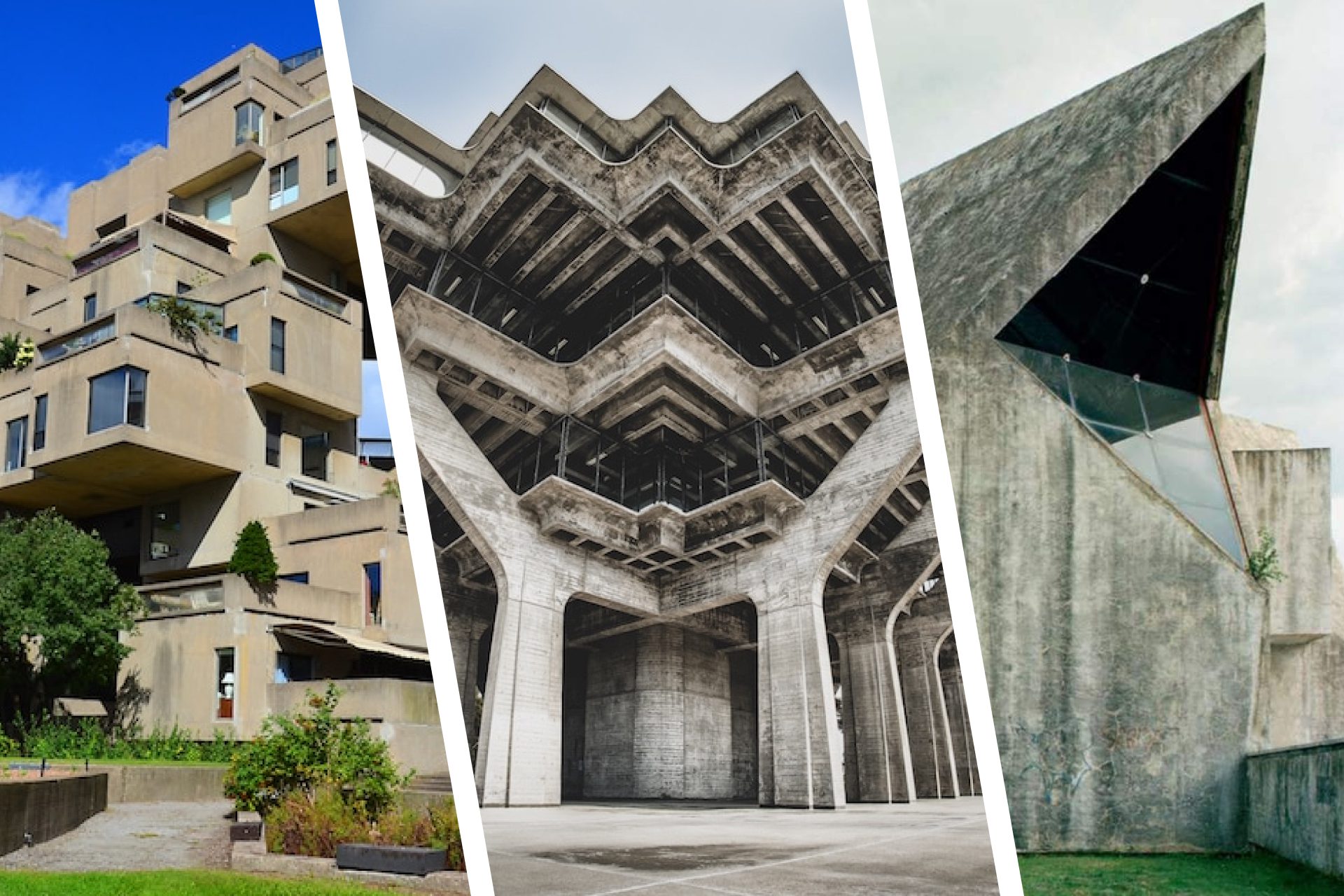
Brutalism, a post-war architectural style that emerged in the mid-20th century, is characterized by its raw and exposed concrete surfaces, geometric forms, and eschewal of ornamentation and decorative elements. The name "Brutalism" is derived from the French term "béton brut," meaning "raw concrete," referring to the material's deliberate and unapologetic use in the style. Brutalist architecture is often associated with public buildings and housing projects, as it was seen as a practical and cost-effective way of providing functional and efficient structures during a time of rapid urbanization and population growth.
Brutalism: The Bold, Uncompromising Face of Modern Architecture - Source filmlifestyle.com
Brutalism's emphasis on raw materials and structural expression aligns with its belief in honesty and transparency in architecture. It rejects the use of ornamentation or applied finishes, instead celebrating the inherent qualities of the materials themselves. The concrete used in Brutalist buildings is often left unadorned, revealing its imperfections and casting a rugged and textured appearance. This approach to architecture has been described as "heroic" in that it embraces the monumentality and grandeur of concrete's physical properties, creating structures that engage with the viewer on a direct and visceral level.
The legacy of Brutalism remains a subject of debate and re-evaluation in contemporary architectural discourse. While some see it as a valuable and honest expression of modernist ideals, others criticize its stark and unforgiving character. Nonetheless, Brutalist buildings continue to captivate and inspire architects and laypeople alike, serving as reminders of a time when architecture sought to embrace the raw and uncompromising qualities of its materials in the pursuit of functionality and social progress.